
Which Lid Types Are Most Suitable for Carbonated Beverages to Prevent Pressure Buildup and Leakage?
Carbonated beverages — soda, sparkling water, club soda, kombucha, and craft beer — pose a distinct engineering challenge for drinkware manufacturers and buyers. The dissolved CO₂ in these liquids continuously escapes into the headspace of a sealed container, creating internal pressure. If the cap or lid cannot safely manage this pressure, the result is leakage, bulging, spray-out on opening, or even catastrophic cap ejection.
For buyers comparing bottles, thermos kettles, and tumblers, choosing the correct lid type is one of the most important decisions you can make. This guide breaks down each common lid style, evaluates its performance under carbonation pressure, and explains what to look for when sourcing containers and custom components.
Why Carbonated Drinks Build Up Pressure
Carbonation is dissolved carbon dioxide gas. In a sealed container, the liquid releases CO₂ until the partial pressure reaches equilibrium. At room temperature, a typical carbonated soft drink can generate 3 to 4 bar (about 45–60 psi) of internal pressure — and higher when shaken or warmed. Standard lids designed for still water are not engineered for this stress. The key requirements for a carbonation-safe lid are: (1) a high-strength seal, (2) mechanical resistance to outward pressure, and (3) ideally, a controlled venting mechanism to release excess gas without opening the container.
Lid Type Comparison
1. Screw-On / Threaded Caps
The traditional screw-on cap is the most reliable option for carbonated beverages, provided it is manufactured with quality threads and a food-grade elastomer gasket. Deep, coarse threads increase the contact area between cap and bottle, preventing the cap from being pushed off by gas pressure. Screw caps are widely used in the drinkware industry on stainless steel bottles, plastic bottles, and thermos kettles.
However, not all screw caps are equal. A cap with multiple sealing points (e.g., a gasket plus an internal plug) holds pressure far better than a simple flat-flange design. Choose a cap with at least 2.5–3 full thread turns and a silicone or TPE gasket that compresses evenly.
For insulated stainless steel containers, a screw-on lid with a built-in pressure-release button is the safest choice. Pressing the button before unscrewing directs the CO₂ upward and out slowly, preventing the classic "geyser" effect.
2. Flip-Top / Hinged Pop-Up Caps
Flip-top caps are convenient for quick sips, but they are generally not recommended for carbonated beverages. The hinge and latch create multiple failure points, and most flip-top lids do not produce enough downward clamping force to keep the seal compressed against the rim. Under sustained CO₂ pressure, the flap can lift slightly and leak gas or liquid. Some premium travel mugs include a locking flip-top mechanism with a stronger latch, but these are exceptions.
If a flip-top is necessary for your design, look for lids with a metal or reinforced plastic latch, a separate threaded base ring, and a pressure-venting feature. Without those, the product will perform poorly with sparkling drinks.
3. Straw Lids
Straw lids are the worst option for carbonated beverages. When CO₂ escapes through the straw opening, it creates continuous bubbles that spray liquid out, causing messes and rapid loss of carbonation. Additionally, the hole in the lid acts as a pressure leak point, making it nearly impossible to maintain fizz. We recommend straw lids exclusively for non-carbonated still beverages like water, tea, and smoothies. For sparkling drinks, a sealed straw-lid convertible design is acceptable only when the straw opening is fully closed and the lid screwed shut with a pressure-proof seal.
4. Sports Caps with One-Way Pressure Valves
Sports caps — the type with a small silicone or plastic valve assembly — can be suitable for carbonated drinks if the valve is designed to relieve pressure outward while preventing liquid from leaking in the opposite direction. A one-way membrane valve opens slightly above ambient pressure, releasing excess CO₂ and balancing the internal pressure. This prevents the bottle from becoming too pressurized and avoids the burst-open effect.
The tradeoff is that these caps gradually lose carbonation because the relief valve vents over time. They are best for single-serving consumption where the drink will be finished within a few hours. For long-term storage of sparkling beverages, a closed screw cap is superior. When sourcing sports caps, request valve materials compatible with acidic carbonated drinks and test the opening pressure to make sure it vents before the cap explodes.
5. Swing-Top / Gasket-Sealed Lids
Swing-top lids, also known as flip-top bottle caps or Grolsch-style closures, are historically proven for carbonated beverages. These lids use a porcelain, metal, or food-grade plastic cap with a rubber gasket, held down by a wire or metal bail mechanism. The bail applies high, even clamping force across the entire circumference of the bottle mouth, which naturally resists the upward force of CO₂ pressure.
Swing-top lids are excellent for home-brewed beer, kombucha, and sparkling water bottle refills. However, they are rarely used on stainless steel insulated bottles because the neck geometry is different and the wire mechanism adds cost and complexity. For custom OEM projects, a swing-top closure is a premium feature that gives a strong visual identity, but it requires careful QC of the rubber gasket and hinge components.
6. Pressure-Relief Safety Lids
The most advanced solution is a pressure-relief safety lid, which combines a full screw seal with an integrated safety valve. These lids are becoming popular on high-end stainless steel thermos bottles and travel tumblers designed for sparkling water and carbonated energy drinks. The valve is typically a small spring-loaded button or a silicone slit valve that opens when internal pressure exceeds a predetermined threshold, releasing a controlled amount of gas. This prevents dangerous pressure buildup while maintaining the seal during normal transport.
For OEM buyers, specifying a pressure-relief lid from your supplier is the easiest way to guarantee leak-proof performance with carbonated beverages. Make sure the supplier performs a pressure test — usually 3 to 5 bar for at least 24 hours inverted — and provides a product certificate for your brand.
Key Selection Criteria for Carbonation-Safe Lids
| Criteria | Why It Matters | What to Specify |
|---|---|---|
| Gasket material | Must remain elastic under pressure and not deform permanently. | Food-grade silicone, TPE, or EPDM with 30–50 Shore A hardness. |
| Thread engagement | Prevents the cap from being pushed off by internal pressure. | At least 2.5–3 full turns; minimum wall thickness 1.5 mm for plastic threads. |
| Venting mechanism | Allows safe pressure release before and during opening. | One-way valve, pressure-release button, or vent slot activated by first thread turn. |
| Leak-proof testing | Verifies performance under real-world carbonation pressure. | Inverted pressure test at 3–5 bar for 24 h; drop test at 1.2 m. |
| Material compatibility | Acidic carbonated drinks can degrade low-grade plastics and metals. | Stainless steel 304/316 for bottles; food-grade PP, Tritan, or PCTG for lids. |
Recommendations by Container Type
- Insulated stainless steel bottle: screw-on lid with pressure-release button or safety valve. Avoid straw lids.
- Plastic sport bottle: sports cap with one-way valve for daily use; screw-on cap for extended carbonation retention.
- Thermos / travel mug: only use models specifically marked carbonation-safe; standard travel mug lids often leak.
- Glass or ceramic bottle: swing-top gasket lid for home-made carbonated drinks, with a replaceable rubber gasket.
- Kids water bottle: screw cap with a small pressure vent; keep carbonated drinks away from straw lids.
Why Choosing the Right Lid Matters for Your Brand
For brands and wholesalers, the lid is more than a closure — it's a safety component and a brand touchpoint. An unreliable lid on a carbonated beverage container can cause product damage, customer complaints, and liability issues. That's why working with a drinkware manufacturer that understands lid engineering is critical.
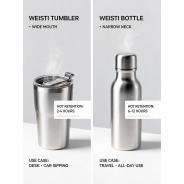
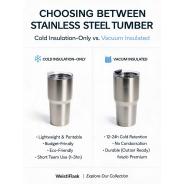
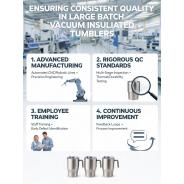
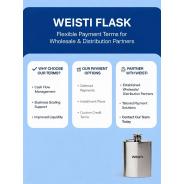
Weisti (Yongkang Weisti Industry And Trade Co., Ltd.) is a factory-direct OEM drinkware partner specializing in stainless steel bottles, thermos kettles, plastic bottles, tumblers, and a comprehensive range of lids and accessories. With 20 hours per day of production capacity and 24/7 sales support, Weisti can help you develop a custom bottle-and-lid system tailored to carbonated beverages — from pressure-testing to custom logos and bulk production.
Weisti also supports customizable 3D models, allowing you to prototype and refine your lid design before committing to tooling. Whether you need a screw-on cap with pressure relief, a sports cap with a one-way valve, or a premium swing-top closure, an experienced OEM partner ensures your carbonated drink container protects your customers and your reputation.
Final Takeaway
When comparing lid types for carbonated beverages, the ranking is clear:
- Best: screw-on lids with integrated pressure-release valves
- Good: swing-top gasket lids and high-quality sports caps with one-way valves
- Poor: standard flip-top caps and straw lids
The safest universal choice for bottles containing sparkling drinks is a threaded cap with a thick silicone gasket and a venting mechanism. If you're sourcing drinkware for your brand, partner with a manufacturer that can pressure-test the complete assembly and customize the lid to your beverage's exact carbonation level.
Learn more about custom bottle and lid solutions at www.weistiflask.com or contact Weisti directly at [email protected] / +86 15267325150.

 English
 German
 French
 Russian
 Spanish
 Japanese
 Korean
 Portuguese
 Ukrainian
 Arabic
 Italian


